
How to Find a Novel Idea: 9 Ways to Go From Nothing to a Story
Last updated: October 2026
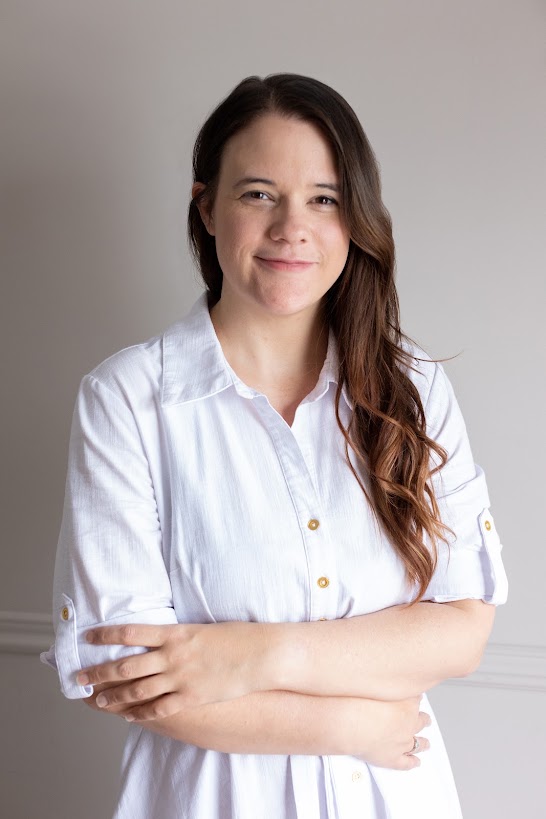 By Gabrielle Dorval, founder of Inkbound

Plenty of people dream of writing a novel and get stuck on the very first step: finding the idea. A novel idea rarely drops from the sky fully formed. You build it piece by piece, out of what you see, what you read, what you listen to. Here are nine ways to make ideas show up, well-known authors who used them (and the one that worked for me), then a quick test to tell whether your idea can carry three hundred pages.
In short: to find a novel idea, start from a "what if…?" question, a character, a place, a piece of music, your own life or a news story. Mash two mismatched ideas together, freewrite for ten minutes, and keep every idea in one place. An idea turns into a story once you know who wants what, and what stands in the way.
1. Start with a "What if…?" question
It's probably the tool novelists reach for most. Philip K. Dick built The Man in the High Castle (1962) on a single premise: what if Germany and Japan had won World War II? The whole novel grows out of that question.
Ask yourself several "what ifs" about the same subject, one after another. What if a character uncovered a family secret? What if the secret was that they'd been adopted? What if their birth parents had been looking for them for twenty years, for the wrong reason? The first questions that come to mind are usually the ones everyone thinks of. Keep going, and hold on to the ones that make you want to know what happens next.
2. Start with a character
One intriguing person can be enough: someone ordinary in an extraordinary situation, or the other way around. Ask what this character wants more than anything, then what's stopping them.
Take a night-shift nurse who dreams of leaving her small town. Nothing spectacular. Now add a sick mother who refuses to let her go, and nobody else to look after her: you've got a desire, an obstacle, and already a conflict. The rest of the character sheet (her past, her flaws, the way she talks) will come as you dig.
3. Start with a place or an image
An abandoned house, a harbor at night, a floating city: a strong setting suggests events. In the 1920s, Daphne du Maurier came across Menabilly, a Cornish manor that had been left to decay. It became Manderley, the house at the heart of Rebecca (1938).
Write down the image that hooks you, then question it. Who lives there? What happened there fifty years ago? What could happen there tomorrow? If the place keeps growing, it may turn into a whole world.
4. Start with a piece of music
That's where the idea for my own novel came from. I was listening to a song, and a scene took over: I could see a character, and above all the way they acted in that exact moment. I knew nothing yet about the story around it. Just that scene, and someone in it.
That's when I realized how much music inspires me, especially pop and slightly epic classical music. I now keep one playlist per project. I put it on before I write, and it drops me straight back into the mood of the novel.
To try it: listen to a track with your eyes closed, then ask what scene could play out over it. Who's there? What are they doing, and why now? Write down the first image that comes, even a blurry one. It's also a good fix on writer's block days.
5. Draw on your own life
You don't need to write your memoir. But an emotion you've lived through, a meeting, an experience that stuck with you will often give you a more honest story than any "original" idea. The trick is to transpose it: change the setting, the genre, the characters. The inheritance fight that split your family can become a war of succession in an imaginary kingdom. Nobody will recognize it, but the anger will ring true, because you felt it.
6. Start from a news story
Newspapers are full of story openings. Leïla Slimani was already circling a novel about a mother and her nanny when she read, in Paris Match, about a nanny in New York who had killed the two children in her care in 2012. That case became the core of Chanson douce (published in English as Lullaby, or The Perfect Nanny in the UK), which won the Prix Goncourt in 2016.
You don't have to go anywhere near that dark. A two-line brief is enough: a dog that finds its owner after six years, a chest uncovered during a renovation. Read the headline and stop there. What actually happened matters less than what you imagine around it.
7. Mash together two ideas that don't belong
A love story in a world without color, a murder mystery on a space station, a fairy tale set in an office. In 2009, Seth Grahame-Smith grafted the undead onto Jane Austen's novel and published Pride and Prejudice and Zombies. It became a bestseller.
To get started, use the table below. Pick a number in each column (at random, with two dice, or with your eyes closed) and see what comes out of the pairing.
| Genre | Place | |
|---|---|---|
| 1 | Murder mystery | A space station |
| 2 | Romance | An isolated lighthouse |
| 3 | Fantasy | A hospital at night |
| 4 | Science fiction | A neighborhood bakery |
| 5 | Horror | A traveling circus |
| 6 | Comedy | A prison |
| 7 | Historical fiction | A cruise ship |
| 8 | Psychological thriller | A village school |
| 9 | Fairy tale | An accounting firm |
| 10 | Western | A museum after closing time |
Most combinations will go nowhere. Every so often, one will make you smile. That's the one to dig into.
8. Freewrite for ten minutes
Set a timer, start from a sentence ("That morning, everything changed when…") and write without stopping or correcting yourself. It's the idea behind Julia Cameron's "morning pages" in The Artist's Way: three longhand pages every morning, never reread.
Most of what you write won't be usable, and that's fine. But one sentence, one image or one character is often worth keeping. This pairs well with a writing sprint.
9. Keep every idea in one place
J.K. Rowling has said the idea for Harry Potter came to her in 1990, on a delayed train from Manchester to London. She didn't have a working pen, and she spent the trip holding it all in her head.
She got lucky. Early on, I didn't: an idea came to me, I didn't write it down because I was sure I'd remember it, and I forgot it. It never came back. Since then, I write everything down right away, even as a single line, even at three in the morning.
Over time, some ideas keep coming back, link up, and end up forming a project. In Inkbound, you can keep them in the project's Notes section, then grow them into character sheets, entries in your world's Codex and events on the timeline, in the same place as your manuscript.
How do you know if your idea can carry a whole novel?
An idea isn't a story yet. To test it, try writing its premise in two sentences (a logline): who wants what, and what's standing in the way?
"A night-shift nurse wants to leave her small town for the city. Her sick mother refuses to let her go, and there's no one else to care for her." That holds up: a thwarted desire, and a question the reader will want answered.
Idea, premise, plot: the difference. The idea is the starting point: a question, an image, a song. The premise sums up the story in one or two sentences: who wants what, and what stands in the way. The plot is the chain of events that takes the novel from beginning to end. You move from one to the next, in that order.
If you can write your premise, you have enough to start building an outline, with whichever structure method suits you. If it isn't clear yet, don't throw anything away. Let the idea sit, or come back to it with another method from the list: a song might hand you the scene you were missing.
Happy writing!
Frequently asked questions
Do you need an original idea to write a novel?
No. Nearly every story reworks familiar themes. What makes yours unique is how you tell it, your characters and your voice.
What if I have too many ideas?
Write them all down, then pick the one you'd most want to keep working on for months. A novel takes a lot of time, so enthusiasm matters. The others aren't lost; they're waiting for the next book.
Do I need the whole story before I start?
No. Some authors plan everything, others discover the story as they write it. What matters is having enough drive and a starting point to keep going.