
Inkbound vs Scribbook: Which One to Choose for Writing a Novel?
Last updated: October 2026
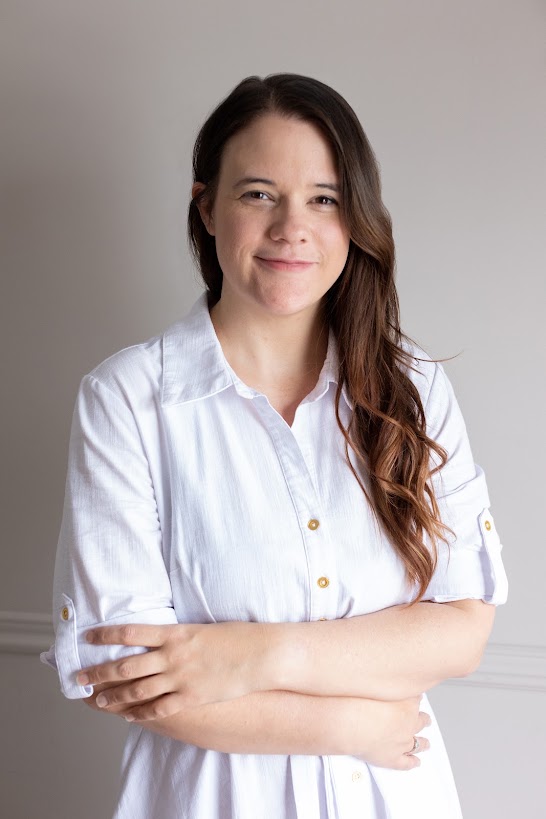 By Gabrielle Dorval, founder of Inkbound
For transparency: I'm the founder of Inkbound. The information about Scribbook comes from its official pricing page, checked on October 29, 2026. Prices and limits can change, so check them before you decide.
Quick verdict
Choose Scribbook if you often write offline or on your phone, or if you like moving scenes around like index cards on a table. Choose Inkbound if your novel rests on a detailed world and a large cast, and you want the grammar checker and the timeline without paying for a subscription.
Both free plans are enough to write an entire novel. What sets them apart is what each one keeps for its paid plan.
What Scribbook does well
Scribbook is a French writing studio built by an independent developer. Its pricing page says it plainly: Premium "is never required to write, or to get back what you've written" (our translation). Without paying, you already get:
- a tree of acts, chapters, scenes and folders, with a card view for reordering scenes by drag and drop;
- offline writing that syncs across your devices once you're back online, with a mobile and desktop app;
- guided frameworks (the Snowflake method, the hero's journey), timed challenges, goals and writing stats;
- character, place and world sheets, Word import, and export to docx, PDF, txt, HTML or Markdown.
You'll also find footnotes, inline annotations and a syllable counter for poetry. The free account allows 20 projects.
The limit that matters on the free plan is storage: 5 MB. For text alone, that's plenty (a 90,000-word novel weighs about half a megabyte as plain text). If you keep a lot of reference images in your research folder, the margin shrinks faster.
Premium costs €6.99 a month with no commitment, or €64.99 for a year (about €5.42 a month). It adds the spelling, grammar and style checker, timelines, character and name generators, an image bank, named versions, automatic backup to Google Drive or Dropbox, and raises the limits to 40 projects and 50 MB.
What Inkbound offers
In Inkbound, the basic unit is the chapter. Around the manuscript sit character sheets linked by a relationship map, a world-building Codex sorted into twelve categories (geography, magic, economy, history…) and a timeline. Everything opens in the side panel while you write. You can check a character's eye color without leaving chapter 14.
The free plan includes two projects, the grammar checker, the style assistant that highlights repetitions, adverbs and weak verbs, a personal dictionary for your invented names, version history with restore, and export to PDF, Word, ODT, EPUB or plain text. It shows ads.
Premium costs US$20, paid once. It unlocks unlimited projects, removes ads, and adds Word or LibreOffice import, AI detection of characters and world elements, AI-corrected dictation, the consistency check and the guided 4-step revision. The AI features run on a free Mistral API key that you create yourself on Mistral's website.
What Inkbound doesn't do: offline writing. There's no mobile app yet either (an Android version is in the works).
Side-by-side comparison
| Criterion | Inkbound | Scribbook | ||
|---|---|---|---|---|
| Free | Premium | Free | Premium | |
| Price | $0 | US$20, one-time payment | €0 | €6.99/month with no commitment, or €64.99/year |
| Book projects | 2 | Unlimited | 20 | 40 |
| Text structure | Chapters, with scene notes | Chapters, with scene notes | Acts, chapters, scenes, card view | Acts, chapters, scenes, card view |
| Character sheets | Yes, with a relationship map | Yes, with a relationship map | Yes (characters, places, worlds) | Plus: sheet and name generators, image bank, avatars |
| World-building | Codex in twelve categories | Codex in twelve categories | Place and world sheets | Place and world sheets |
| Timeline | Built-in timeline | Built-in timeline | No | Timelines |
| Checker | Grammar | Grammar | No | Spelling, grammar and style |
| Style and repetitions | Style assistant: repetitions, adverbs, weak verbs | Style assistant: repetitions, adverbs, weak verbs | No | Style analysis (with the checker) |
| Voice dictation | Basic dictation | AI-corrected dictation | Voice dictation (beta) | Voice dictation (beta) |
| AI detection | No | Characters, world, consistency (free Mistral API key) | Not mentioned | Not mentioned |
| Offline | No | No | Yes | Yes |
| Mobile app | Android in the works | Android in the works | Mobile and desktop | Mobile and desktop |
| Version history | Word-level comparison, restore | Word-level comparison, restore | 15 automatic versions per project, word-level comparison | 50 versions per scene, named versions, daily snapshot |
| Word import | No | Yes (and LibreOffice) | Yes (and Excel) | Yes (and Excel) |
| Export | PDF, Word, ODT, EPUB, plain text | PDF, Word, ODT, EPUB, plain text | docx, PDF, txt, HTML, Markdown | docx, PDF, txt, HTML, Markdown |
| External backup | No | No | No | Google Drive, Dropbox |
| Ads | Yes | Removed | Not listed | Not listed |
| Interface languages | French, English | French, English | French | French |
How much does each tool cost over three years?
A novel rarely takes less than a year. Often two or three. If you want a grammar checker on both sides, here's the math:
- Scribbook Premium, yearly: 3 × €64.99 = €194.97.
- Scribbook Premium, monthly: 36 × €6.99 = €251.64.
- Inkbound: nothing, the grammar checker is free. Premium, if you want the AI features and unlimited projects, costs US$20 once.
The math doesn't settle everything. If your word processor's checker is enough and you need neither timelines nor Dropbox backup, free Scribbook will never cost you a cent, with ten times as many projects as free Inkbound. (Inkbound Premium's price is a launch price that will go up: check the current rate.)
Where Scribbook keeps the edge
You're writing on the train from Montreal to Quebec City. The signal drops just past Drummondville. In Scribbook, you keep typing, and the text syncs when the signal comes back. In Inkbound, you wait. If your writing sessions look like that, the question is settled.
The card view matters too. Writers who work out of order, an ending scene on Tuesday and an opening scene on Thursday, find it more natural to move cards than to reorganize chapters. And if timed challenges and stats keep you going, Scribbook puts them at the center of the tool, for free.
Where Inkbound takes the lead
Chapter 22. Your heroine returns to Vesmar, the port city from chapter 3. Was it north or south of the river? Who ran the inn again? In Inkbound, the Codex opens to the right of your text, Vesmar's entry is there, and you haven't lost your sentence. For a fantasy novel or a family saga with thirty characters, that's where you save the most time day to day. (To build that kind of world, see the basics of world-building.)
The rest comes down to what's free. The timeline, the grammar checker and the style assistant come without a subscription, while Scribbook keeps its checker and its timelines for Premium. The personal dictionary stops your invented names from being underlined on every page. EPUB export lets you produce an ebook without another tool. And the bilingual interface helps authors who write in both French and English.
How to choose
Ask yourself four questions:
- Do you often write offline, or on your phone?
- Do you think in scenes you move around, or in chapters tied to a detailed world?
- Do you want a grammar checker included without a subscription?
- Would you rather pay every month, or once?
If you're still torn, take one chapter and write it in both free plans. How the editor feels after an hour matters more than any feature list, this one included. For a wider look at the options, see our novel writing software comparison.
Happy writing!
Frequently asked questions
Is Scribbook free?
Yes. The free account lets you write a whole book, with 20 projects and 5 MB of storage. Premium costs €6.99 a month or €64.99 a year.
Is Scribbook's grammar checker free?
No. According to Scribbook's pricing page, the spelling, grammar and style checker is part of Premium. In Inkbound, the grammar checker is included in the free plan.
Can you write offline in Inkbound?
No, Inkbound needs an internet connection. Scribbook lets you write offline on its free plan.
Can you move from Scribbook to Inkbound?
Yes. Export your project as docx from Scribbook, then import the file into Inkbound, which splits it into chapters (import is a Premium feature). On the free plan, you can paste your chapters one by one.
Is Inkbound paid?
Two projects are free, with no time limit. Premium (unlimited projects, no ads, AI features, Word import) costs US$20 as a one-time payment, with no subscription. It's a launch price that will go up.
Which one is better for a fantasy novel?
If your world has many places, factions and rules, Inkbound's free Codex and timeline are built for that. Scribbook has world sheets on its free plan, and its name generators and timelines come with Premium.