
Writing a Memorable Antagonist: Mistakes to Avoid
Last updated: September 2026
A novel is rarely stronger than its antagonist. A well-written hero facing a flat villain often falls flat too, because the tension of the whole story depends on the antagonist as much as on the protagonist. Here are the most common mistakes, and how to avoid them.
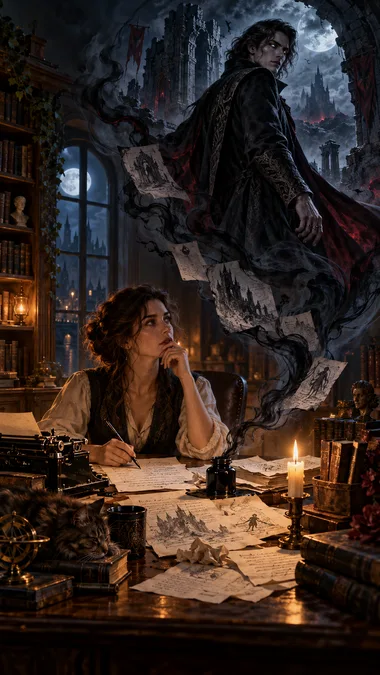
Mistake #1: The villain who's bad for no reason
An antagonist who does evil simply because "he's the villain" doesn't hold up over an entire novel. Give them a motivation that makes sense from their own point of view, even if it's destructive seen from the outside. Take Javert, in Les Misérables: his relentless pursuit of Jean Valjean isn't gratuitous cruelty, it comes from an absolute, coherent belief that the law is the only possible form of redemption, including for himself. A good antagonist is the hero of their own story.
Mistake #2: Opposition that's only physical
The best opposition isn't always the one that hits hardest, but the one that directly contradicts your protagonist's values or flaws. That's exactly the case with Javert against Jean Valjean: their confrontation is almost never physical, it pits two irreconcilable worldviews against each other, rigid law versus redemption through compassion. Javert embodies what Valjean would have remained had he never changed, which creates a far richer tension than a simple physical obstacle, and also explains why it's precisely this antagonist who opposes precisely this hero.
Mistake #3: No competence or nuance whatsoever
An antagonist who's too easy to beat removes all stakes from the final confrontation. Give them real skill, real intelligence, something that makes them dangerous for good reasons. Hannibal Lecter isn't threatening through strength or numbers: it's his intelligence, his ability to anticipate and manipulate, that makes him a credible adversary against otherwise competent investigators.
Mistake #4: Disappearing the moment they're no longer useful
An antagonist who only shows up in scenes that move the plot forward, without ever existing outside them, ends up feeling like a prop. Javert, again, has his own life in the novel: his career, his loyalty to the institution, his own doubts that eventually break him. Let your antagonist have scenes where they don't interact with the hero, so they exist as a full character in their own right.
A good question to test your antagonist
Could you write an entire chapter from their point of view without them perceiving themselves as the villain of the story? If the answer is no, that's often a sign they still lack a real motivation, coherent from their own point of view.
Happy writing!
Frequently asked questions
Does an antagonist have to be human?
No. The antagonist can be an institution, a disaster, or even a part of the protagonist themselves. The principle stays the same: coherent opposition, not gratuitous.
Can an antagonist be likable?
Yes, and that's often what makes them memorable. An antagonist you understand, without necessarily excusing them, leaves a far longer impression than a simple obstacle to overcome.
Should the antagonist get a transformation arc too?
It's not required, but it often enriches the story. An antagonist who evolves, even slightly, avoids feeling like a fixed piece placed there just to be an obstacle.